
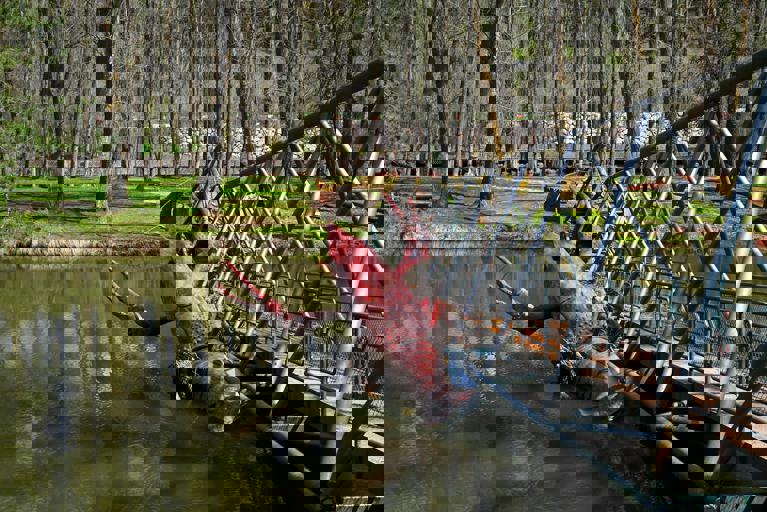
Across the city’s green spaces, visitors are now greeted by a series of striking metal sculptures that seem to rise unexpectedly from the landscape. These towering artworks are the result of visionary efforts by local sculptor Martin Ellis, who has made a name for himself by transforming discarded urban scrap into celebrated public art. His pieces invite both admiration and contemplation, challenging common notions about the life cycle of everyday materials.
Ellis’s creative journey began a decade ago, when he was inspired by the increasing presence of metal waste in city streets and industrial yards. “I saw not just rubbish, but the raw outlines of something greater,” Ellis explained during a recent interview. He began collecting discarded pipes, car parts, and machinery, finding beauty in the twisted forms and aged patina of metal that others had left behind. This passion drove him to pursue a unique artistic path.
The sculptor’s latest project comprises five monumental installations, now prominently displayed in local parks and public squares. Each piece stands between four and seven meters tall, constructed from hundreds of welded metal fragments. The artworks take on organic shapes, with sweeping curves and angular protrusions that mimic the forms of trees or urban architecture. Passersby often pause to inspect these forms, drawn in by their intricate details and scale.
Community response has been enthusiastic, with many residents praising the way Ellis’s work transforms overlooked spaces into destinations for reflection and gathering. “It’s wonderful to see our parks enlivened by art that has such a positive environmental message,” remarked Anna Grice, a council member involved in commissioning the project. Children are often seen playing around the sculptures, intrigued by their magnitude and the hidden surprises tucked within the maze of metal.
For Ellis, prioritising sustainability is just as important as artistic expression. He credits his success to partnerships with local scrap metal dealers and recycling centres, who help him source the raw materials needed for his art. This collaboration not only diverts waste from landfills, but also encourages others in the community to reconsider what is truly ‘disposable.’ “We’re showing that what’s thrown away can still have value,” Ellis noted.
The installation of these monumental sculptures has also spurred discussion about the role of public art in fostering civic pride and community identity. According to a recent survey by the city’s cultural office, over 70 percent of residents feel that public artworks like Ellis’s contribute significantly to the local character and attractiveness of shared spaces. Many hope that such projects will be expanded to other neighbourhoods in the future.
Ellis’s work resonates strongly with broader trends in British contemporary art, where themes of sustainability and reuse are gaining traction. Art historian Dr. Louise Cranford observes, “Ellis’s sculptures are part of a growing movement redefining both the materials and message of public art.” By reimagining scrap metal as monumental landmarks, these pieces not only delight but also provoke thought about consumption and renewal in urban life.
Looking ahead, the sculptor is already planning his next series of installations, with designs aiming to integrate interactive elements and sound. His vision is to deepen public engagement with the environment, encouraging new ways to experience art and nature together. As these recycled-metal giants continue to inspire, they also remind us that transformation is possible, even from the most unassuming beginnings.